The Benefits of Strategic Procurement for Facilities Management Services


Our top 25 aged care service provider engaged PlaceHQ to provide technical facilities management expertise to support the strategic procurement of four essential services:
· Mechanical Services
· Hydraulic Services
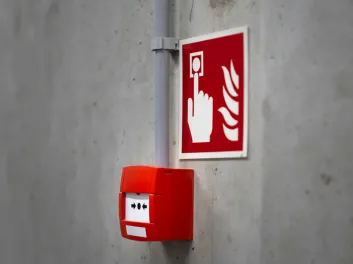
· Fire Services
· Electrical Services.
The purpose was to standardise the service specifications and establish a detailed asset register to reduce risk-based pricing for the future market approach.
A key priority was to ensure that the residential and independent living facilities were managed in accordance with regulations imposed by the Aged Care Quality and Safety Commission (ACQSC) to protect the health and safety of residents, staff and visitors.

The existing contract scope and specifications were not prescriptive and this weakened the client's ability to manage performance effectively. As a result, reactive maintenance costs for each service category ranged from 50% to 100% of total operational expenditure, exceeding the circa 20% industry rule of thumb.
However, this created an opportunity to amend the scope and service frequencies to find a better equilibrium between planned preventative maintenance and high-cost reactive call outs. In additional to developing a detailed scope and expectations, the revised pricing structure provided greater visiblity of hidden costs to reduce the impact of unplanned fees and travel costs.
The existing supply base for each service was broad, with expired contracts holding over a month-by-month basis at the risk of business continuity. Varied hourly rates cards across vendors increased the difficulty of managing the invoice approval process which is a typical cause of cost leakage that impacts cost containment.
The current state presented an opportunity to consolidate suppliers, streamline service quality to an aligned scope and standard and enhance performance management. Additionally, a tender process provides a catalyst for any client to negotiate better financial outcomes and longer term visibility for forecasting purposes.
PlaceHQ conducted a comprehensive Current State Assessment to evaluate the service delivery model, commercial terms, contract governance and processes against best practice to identify opportunities to close gaps. Analysis of two years’ service category baseline data was supported by stakeholder interviews to document strategic objective for cost, quality and innovation.
PlaceHQ collated multiple data records to develop detailed asset registers per service category in support of an approach to market. Considerations for supporting regional communities and reducing travel costs included governance around tenderer's geographic reach, with a requirement to engage local businesses where travel exceeds a certain distance. This supported sustainability targets and helps stimulate local economies by thinking globally, but acting locally.
PlaceHQ developed a detailed Statement of Requirement (SOR) for four service categories: Fire Protection, Hydraulic, Electrical and Mechanical. Each SOR enabled our client to adopt risk-appropriate behaviour to manage compliance obligations and effective contract management practices. Guardrails included referencing all relevant legislation, regulation, codes, and Australian Standards.
The frequency and tolerance of service intervals, process for inspection, testing preventative maintenance, surveys and mandatory reporting requirements were prescribed for transparent contract performance expectations of the supplier and client and remove ambiguity. Contract management was enhanced with a governance framework incorporating transition-in/out activities, report and meeting format, content and cadence.
A detailed asset register was collated for each facility and service category as an imperative for accurate scoping and pricing by future tender respondents. This deminished the likelihood of risk-base pricing.
PlaceHQ was engaged for our deep technical expertise and experience developing compliant scopes for essential services contracts. Essential service are the FM service categories with the highest health and safety risk. The introduction of reforms to the fire safety regulations increased compliance measures and obligations for our client.
PlaceHQ engaged with key stakeholders to understand the current property portfolio structure, service delivery model, governance and processes to deliver the services. Current state observations provided insights into best practice opportunities and the potential impact if improvements were not implemented under future contracts.
Critical inclusions included:
· Revised delegated authority limits for expenditure and thresholds for quotes.
· Defined work order process to manage the status of reactive maintenance.
· Developed a priority level and response matrix based on an urgency to be aligned to vendor KPIs.
· Implemented periodic reports and meetings to review trends, innovation and sustainability.
· Aligned the pricing schedule to the Asset Register to remove ambiguity and for ease of comparison.
· Mandated maximum travel distances to benefit local economies and encourage indigenous participation.
· Requirements to develop Risk and Asset Registers so the client could maintain visibility of baseline data.